
Traditional Knowledge (TK) and Traditional Cultural Expressions (TCEs) have never sat comfortably inside the current Intellectual Property rights regime, and the debate over how to protect them has been running for years.
In Kenya, that debate came to a head over the unsuccesful attempts to trademark the Kikoy, the appropriation of Maasai Shuka and the Kiondo in the early 2000s and 2010s.[1] Public anger over it helped push through the Protection of Traditional Knowledge and Traditional Cultural Expressions Act of 2016, a law that promised local communities real protection and a real shot at commercialising their own knowledge and culture.
Ten years later, the Geographical Indications Bill of 2026 also promises to deliver on that promise. Geographical Indications (GI) experts and scholars have touted GIs as another means through which local and indigenous communities can protect and commercialise their TK and TCE.
In this article, we shall briefly examine what Traditional Knowledge is, how the TK Act attempts to protect it, and why the Act has fallen short of its promise. We then turn to Geographical Indications as a distinct IP mechanism and consider what the Geographical Indications Bill 2026 offers Kenyan communities that the TK Act does not.
Understanding Traditional Knowledge.
Traditional Knowledge does not have a universally accepted definition, but in a general sense, it encompasses knowledge, know-how, innovations, skills, and practices that are passed from one generation to the next within a community that is part of that community’s spiritual and cultural background. This definition also includes traditional cultural expressions like music, dance, art, signs, symbols, handicrafts, among others. [2]
Traditional Knowledge is an unconventional form of intellectual property because of its nature. Specifically, communal ownership, oral transmission, and unknown authorship, which are opposite to the current IP regime that priorities expression in tangible form, disclosure, and an identifiable author characterises it.
It is because of this fundamental conflict, that there has long been disagreement over how best to protect Traditional Knowledge. Some experts believe existing intellectual property tools such as copyright, patents, and trademarks can offer partial protection, while others argue that TK requires a distinct sui generis legal framework that can prevent misappropriation and support community-based commercial use. Others maintain that some TK is already in the public domain or otherwise not suited to exclusive legal protection, which makes stronger protection difficult
This lack of consensus resulted in different countries having varied approaches to the protection of Traditional Knowledge. Kenya elected to enact a sui generis law to govern the protection and use of Traditional Knowledge in the country known as the Protection of Traditional Knowledge and Cultural Expressions Act of 2016 (TK Act).
N.B. All references to Traditional Knowledge in this article will include Traditional Cultural Expressions unless stated otherwise.
The Protection of Traditional Knowledge and Cultural Expressions Act.
At the heart of the TK Act is the principle of prior informed consent. No person, whether an individual, a corporation, or a foreign entity, may reproduce, perform, broadcast, translate, adapt, or build upon a community’s traditional knowledge without first obtaining that community’s consent.[3] This protection applies regardless of whether the community is actively commercialising its knowledge or not. A community that has kept a healing practice or a weaving technique within its tradition for generations does not need to be selling it to be protected.
Communities also have the right to prevent others from making their knowledge available to the public or communicating it in any form without permission, giving them meaningful control over how and whether their knowledge enters the broader marketplace.[4]
Beyond placing obligations on would-be users of traditional knowledge, the Act places an affirmative duty on both national and county governments to actively assist communities in preventing misappropriation, misuse, and unlawful access to their knowledge.[5] Rather than leaving communities to discover and pursue infringement on their own, the state is statutorily obligated to help build the defences. Both levels of government are further tasked with establishing knowledge repositories to document and preserve traditional knowledge, providing communities with an evidential record that can anchor any future claim of misappropriation.[6]
Where a community chooses to commercialise its traditional knowledge, the Act ensures that consent to exploitation does not mean surrendering the right to benefit from it. Any licensing or assignment of traditional knowledge must be registered with the Cabinet Secretary and must carry with it the right to fair and equitable benefit sharing, whether monetary or otherwise.[7]
Crucially, protection under the Act does not expire on a fixed date. As long as the knowledge remains alive within the community, transmitted from one generation to the next and integral to that community’s identity, it remains protected. This perpetual protection reflects the living, dynamic nature of traditional knowledge in a way that the fixed terms of patents or copyright never could.
Why the TK Act Has Under-delivered.
The Act attempts to address every aspect of Traditional Knowledge and, in doing so, risks achieving very little. Traditional knowledge is inherently cross cutting and overlaps with other areas including biodiversity and farmers rights. The Act seeks to regulate all forms of traditional knowledge including TK associated with genetic resources. This form of TK was already governed to some extent by the Environmental Management and Co-ordination (Conservation of Biological Diversity and Resources, Access to Genetic Resources and Benefit Sharing) Regulations, 2006 and recently promulgated Access to Biological Resources and Benefit Sharing Regulations of 2025.
Although the government and its agencies are mandated to assist communities in preventing misappropriation, this responsibility has been significantly undermined by the fact that the digital repository is non-existent. Furthermore, because registration is voluntary, some of the communities may not want to formally document their knowledge. This in turn affects the repository contents as well as the National and County Government’s ability to effectively discharge their duties towards the Traditional Communities.
Finally, there is a more basic problem sitting underneath all of this: the Act never actually says who is in charge at the National level. The Act assigns four ongoing duties to the national government. Specifically, maintaining the repository, promoting and conserving traditional knowledge, protecting it from misuse and misappropriation, and facilitating access to information about it. Only the first of these is tied to an actual institution, the Kenya Copyright Board, and only for the narrow tasks of hosting the repository and resolving concurrent claims by numerous communities to a TK. The other three are left with no institution named at all. A duty to protect Traditional Knowledge from misuse means little if no institution has been assigned to carry it out, and no one can say with confidence who that is.
Geographical Indications.
Geographical Indications (GIs) refer to signs that identify goods or products as originating from a geographical location that possess qualities or reputation of the said geographical location.[8] These products or goods may be agricultural or industrial in nature.
Geographical Indications represents one out of the three categories of origin linked products. The other two are indications of source, as provided under the Paris Convention, and appellations of origin, provided under the Lisbon Agreement. These concepts will be discussed in greater detail in a future article.
To qualify for protection as a Geographical Indication, the following requirements must be fulfilled:
- The sign must identify a product or good originating from a specific geographical location.
- The qualities or reputation of the product or good should be essentially due to the place of origin
- There must be a link between the product or good and its original place of production.
The Case for GIs as a TK Protection Tool.
First, GIs are based upon collective traditions and collective decision-making process which closely mirrors the communal way in which Traditional Knowledge is held. They also apply to an indefinite number of producers who collectively establish the rules, production methods, and quality standards that all authorised users must observe. Furthermore, GIs usually reward reputation and good will associated with a specific geographical location that is built by the producers over years.[9]
Secondly, so long as the natural and cultural characteristics in the relevant geographical area are maintained, the GI continue to recognize the quality and reputation of the product. For Traditional Knowledge Based Products, this creates an incentive to preserve the traditions and practices that give rise to those products, thereby supporting the continued transmission of the underlying Traditional Knowledge.
Lastly, GIs confer the rights to claim association with a specific area where the product originated and are not dependent on any specific right holder. They operate by limiting the class of people that may benefit from the accumulated knowledge typical to a specific locality as well the people that may claim association with the locality. In addition, GIs are non-transferable and place a great emphasis on the relationship between human culture, their land and surrounding environment.
What the GI Bill 2026 Offers TK Holders.
The Bill provides that protection as a GI will extend to natural, agricultural, food, handicrafts and industrial products.[10] Rights to a registered GI cannot be assigned or mortgaged which helps protect a communities knowledge associated with the product against corporate or commercial appropriation.[11]
Unlike the TK Act, the GI Bill requires only that producers from a particular geographical area form an association or a cooperative. The membership threshold for these bodies is a minimum of ten persons.[12] By contrast, the TK Act relies heavily on community organisation and mobilisation, which can be difficult in an era of regional and global migration where communities are increasingly dispersed. In addition, most communities do not maintain formal registers of their members.
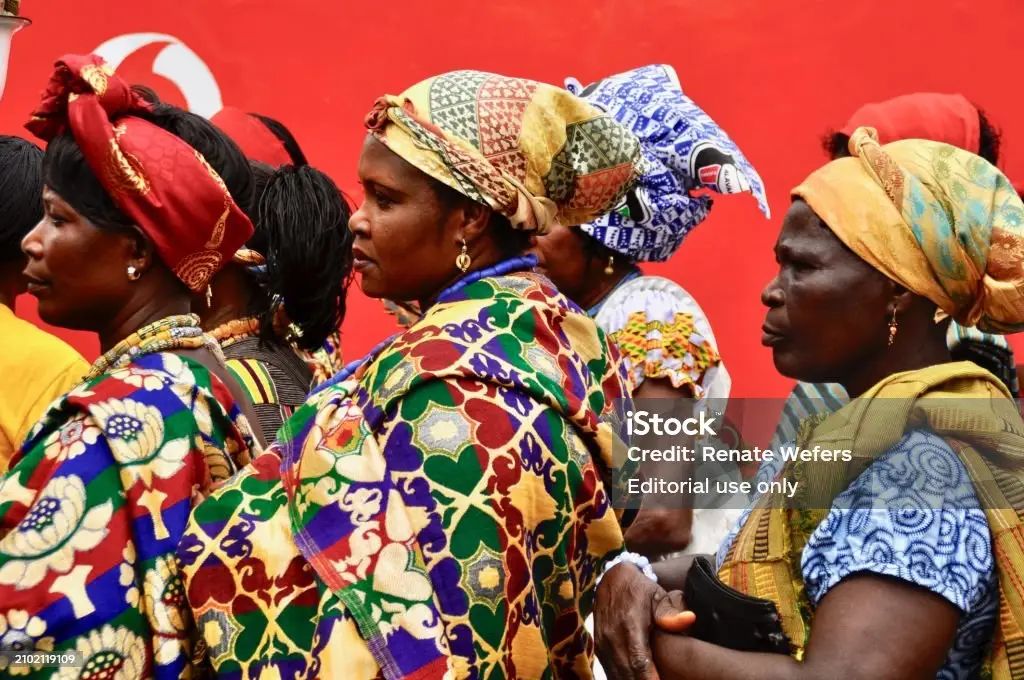
The TK Act also places a huge reliance on custodians. In many Kenya Communities where customary leadership structures remain highly patriarchal, this may not likely favour the women in the community who want to deal in TK based products. If enacted, the GI Bill once enacted into law has the potential to enable women, who constitute the majority of TK Practitioners to participate more equitably and actively in markets based on TK products.
A Piece of the Puzzle, Not the Whole Picture.
The TK Act of 2016 promised communities control over their knowledge and a share in its commercial value, but a decade on, an absent digital repository, voluntary registration, and an ill-suited custodian in KECOBO have left much of that promise unrealised. The Geographical Indications Bill 2026 steps into this gap with real strengths: collective ownership that mirrors how communities already hold TK, non-transferable rights that guard against corporate capture, and a lower organisational bar that sidesteps the TK Act’s reliance on custodianship structures that often exclude women, who form the backbone of TK practice in Kenya.
But GI protection is not a substitute for the TK Act, it is a complement to it, and a partial one at that. GIs only reach knowledge once it has been fixed into a tradable product. A woven Kikoi or a fermented drink qualifies; a healing song, an oral history, or a ceremonial dance does not. Nor can a GI reach into the genetic material or biological properties that may underlie a product; that work still belongs to the TK Act, Environmental Management and Co-ordination (Conservation of Biological Diversity and Resources, Access to Genetic Resources and Benefit Sharing) Regulations and the Access to Biological Resources and Benefit Sharing Regulations of 2025.
The Way Forward
Kenya does not need to choose between these frameworks; it needs to make them work together deliberately. That means treating GI registration as the right tool specifically for TK that has already been, or can be, embodied in a marketable product, while continuing to lean on the TK Act, other IP legislation , and the ABS Regulations for everything that GIs cannot reach.
For communities and producer groups, the practical step is to start organising now: identifying products with a genuine geographical link, forming the associations the Bill requires, and engaging early with KIPI and county governments rather than waiting for the law to settle before participating in it.
For policymakers, the task is to use the remaining legislative window to hand producers some control over GI governance, rather than administrative participation subject to state oversight. Finally, resource the repositories that both the TK Act and the GI Bill, if enacted, will quietly depend on.
Neither law will deliver on its own. Fulfilling on the decade-old promise of the TK Act will take treating GIs, TK, and ABS protection as one coordinated system, built with communities at the centre rather than the state.
_________________________________________________________________________________________
[1] Dr. Victor Nzomo, ‘Kiondos, Kikoys and Shukas: Intellectual Property Protection in Kenya.’ https://ipkenya.wordpress.com/2011/07/07/kiondos-kikoys-and-shukas-intellectual-property-protection-in-kenya/. (Viewed on 01 July 2026)
[2] WIPO, ‘Traditional Knowledge’ https://www.wipo.int/en/web/Traditional Knowledge/ (Viewed on 02 July 2026)
[3] Section 35 & 36 of the Protection of Traditional Knowledge and Traditional Cultural Expressions Act of 2016
[4] Section 18 of the Protection of Traditional Knowledge and Traditional Cultural Expressions Act of 2016
[5] Ibid
[6] Section 8 of the Protection of Traditional Knowledge and Traditional Cultural Expressions Act of 2016
[7] Section 22 & 24 of the Protection of Traditional Knowledge and Traditional Cultural Expressions Act of 2016
[8] WIPO, ‘Geographical Indications’ https://www.wipo.int/en/web/geographical-indications. (Viewed on 04 July 2026
[9] Dagne, Tesh W., Law and Policy on Intellectual Property, Traditional Knowledge and Development: Legally Protecting Creativity and Collective Rights in Traditional Knowledge-Based Agricultural Products Through Geographical Indications (May 4, 2010). Estey Centre Journal of International Law & Trade Policy, Vol. 11, No. 1, 2010, Available at SSRN: https://ssrn.com/abstract=1600293
[10] Section 2 of the Geographical Indications Bill 2026
[11] Section 19 of the Geographical Indications Bill 2026
[12] Section 12 of the Geographical Indications Bill.

Keziah is an Advocate of the High Court of Kenya with eight years’ experience in dispute resolution, intellectual property, and commercial law.She holds an LL.M. in Intellectual Property Law from the University of Cape Town. She is a registered Patent and Trademark Agent with the Kenya Industrial Property Institute as well as a volunteer patent specialist under WIPO’s Inventor Assistance Programme.
Outside the office, she’s usually behind a camera or several episodes deep into her latest drama series.